

How Physical Therapy Can Help Your Pickleball Injuries
No matter what your skill level or experience with Pickleball, learning how to prepare your body correctly is the key to enjoying the sport. Pickleball is the fastest growing sport in America, and the game is gaining more and more players every day.
Pickleball is an easy and fun way to stay active. The sport is similar to other racquet sports and is often played on modified tennis courts.
Unfortunately, people jump right into the sport without any preparation or training to prepare their bodies for the demands on their muscles, tendons, and joints. At Carolina Prime Physical Therapy, our physical therapists have proven success working with people of all ages to recover from injury and resume whatever sport they enjoy.
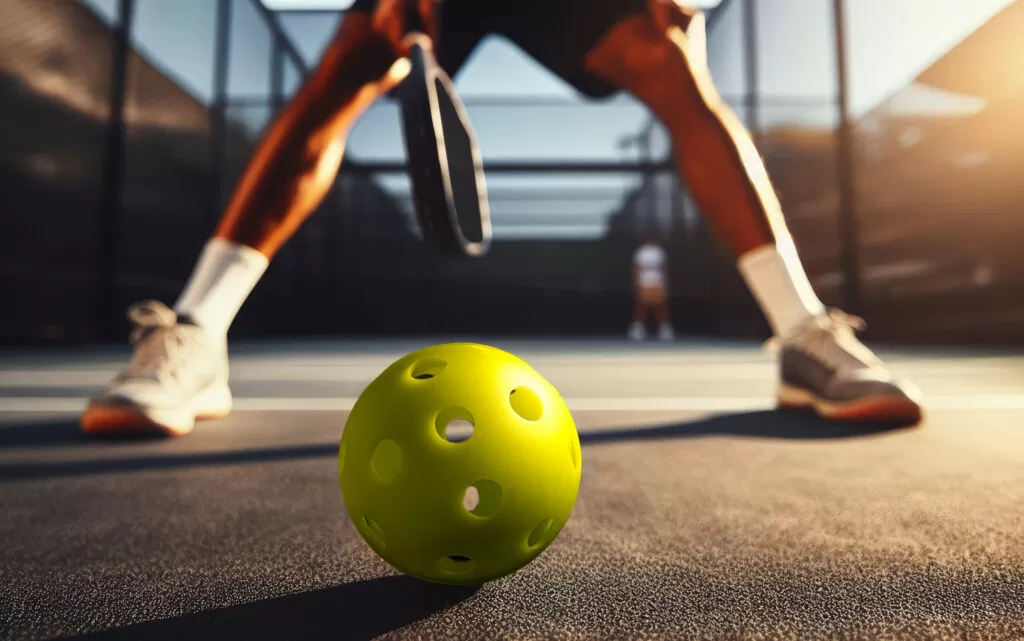
The most common injuries associated with Pickleball
As with any sport, injuries can be a part of playing the game of Pickleball. The sport’s popularity has opened it up to people of all ages. The game is easy to play for beginners and can also meet the requirements of a more competitive player with the possibility of a fast-paced match for singles or doubles. As the popularity grows, so too does the risk of injury.
The sport requires abrupt changes of direction and stopping and starting movements, all of which have been linked to non-contact injuries like sprains and strains. There is also the potential for falling and repetitive movement type injuries, especially to the upper extremities. Another potential risk of injury stems from the lack of preparation and the age of the deconditioned athletes.
The most common injuries in Pickleball include:
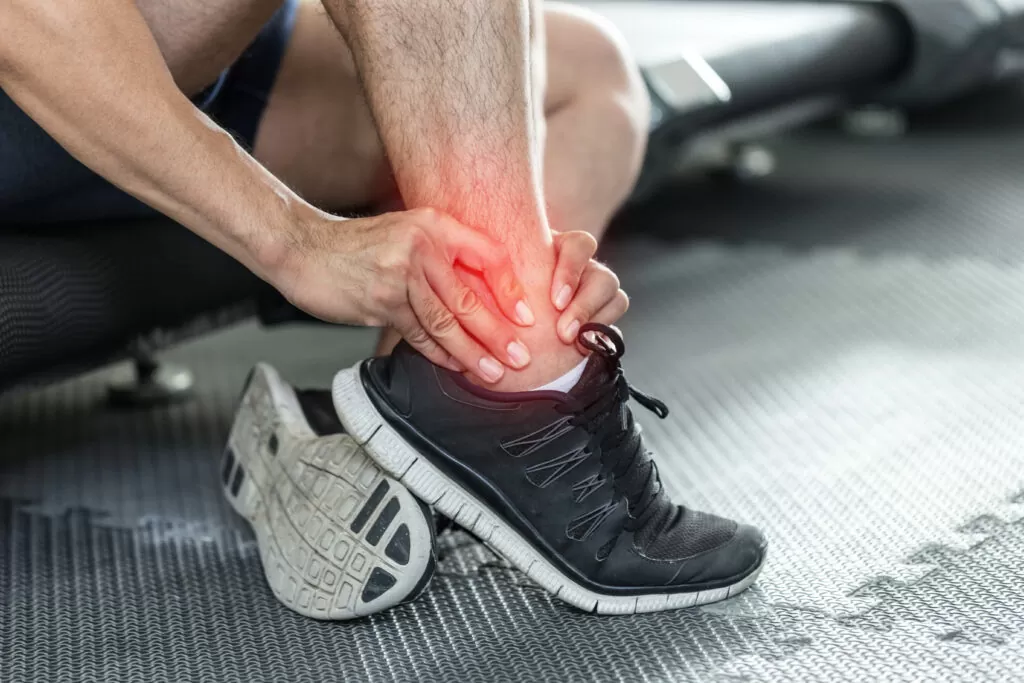
- Ankle sprains
- Achilles tendon injuries and inflammation
- Patella (knee cap) tendinopathies
- Hamstring, adductor (inner thigh), or quadriceps muscle strains
- Shoulder impingements and rotator cuff injuries
- Elbow tendonitis (Tennis elbow)
- Wrist fractures from falls
What to expect at physical therapy sessions
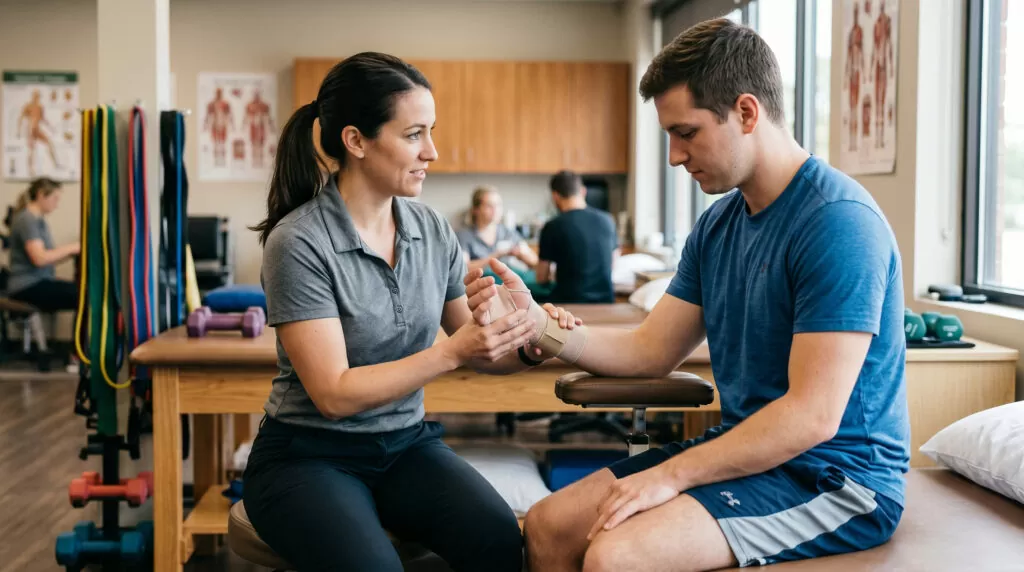
Physical therapy should start immediately following most injuries to ensure the fastest recovery possible. A physical therapist with experience treating sports-related injuries will conduct a thorough evaluation to determine the injury’s severity and identify any other factor that may affect your ability to recover promptly.
Next, your therapist at Carolina Prime Physical Therapy will create a targeted, individualized treatment plan for you to promote an accelerated recovery plan and prevent future injuries associated with Pickleball.
For example, your physical therapist will guide you through exercises designed to help the injury and return to your pre-injury abilities. We will start with pain management and restoring mobility to the injured area.
Request an appointment today!
At Carolina Prime Physical Therapy, our therapists are experts at treating Pickleball-related injuries. We have proven success with treating athletes of all skill levels and ages.
Call today to schedule an appointment with one of our specialists!
Sources: https://www.ncbi.nlm.nih.gov/pmc/articles/PMC6913863, https://journals.lww.com/acsm-csmr/Fulltext/2020/10000/Pickleball__Review_and_Clinical_Recommendations.8.aspx?context=LatestArticles, https://www.sciencedirect.com/science/article/abs/pii/S0736467919307991
Why Carolina Prime Physical Therapy is the Key to Full Recovery After a Sports Injury
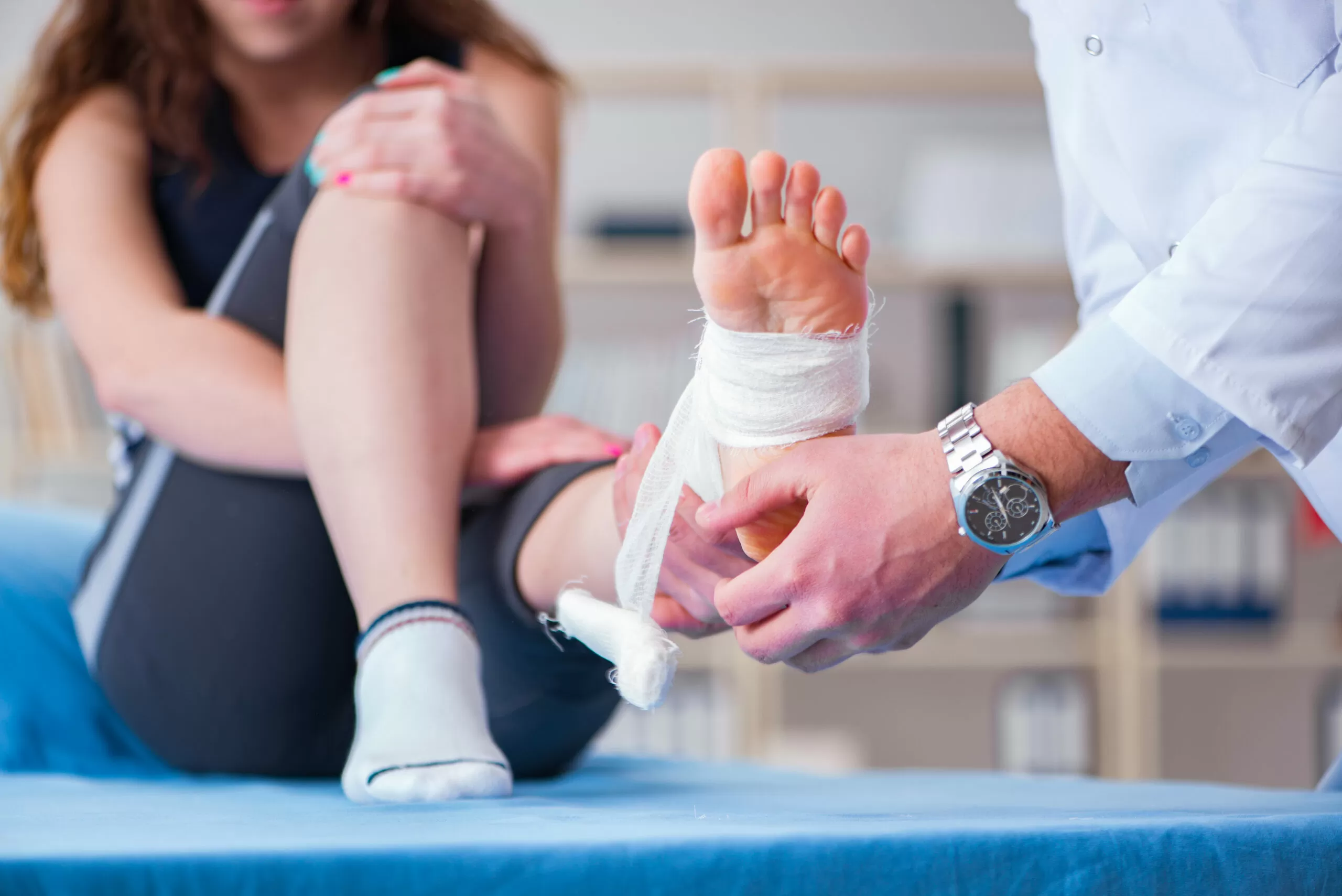
When recovering from a sports injury, time is of the essence, and seeing a physical therapist as soon as possible can be the pivotal factor that leads to a complete and successful rehabilitation. While many may consider these injuries a mere inconvenience, they can have long-lasting consequences if not treated properly from the start.
Here’s some of the common problems with waiting to see one of our physical therapists after a sports injury:
- Incomplete Healing: Ligaments and tissues may never regain their full strength and stability, leaving you vulnerable to further injuries. The longer you wait to address the issue, the more challenging it becomes to recover fully.
- Poor Rehabilitation: Inadequate or improper rehabilitation is a common pitfall that leads to recurrent injuries. Without proper rehabilitation, you risk weakening the supporting structures, setting the stage for another injury.
- Return to Activity Too Soon: One of the biggest mistakes an athlete can make is rushing back into physical activities or sports before a full recovery. It’s understandable to be eager to return to the game, but a premature return can lead to re-injury. Our physical therapists will guide you on when it’s safe to resume your activities, ensuring you don’t jeopardize your progress.
Your Road to Recovery Begins Now — Take Action Today!
When it comes to sports injuries, early intervention by one of our physical therapists is not just a wise choice — it’s a game-changer. Their expertise and guidance can make all the difference between a complete recovery and a cycle of recurrent injuries.
Don’t let an injury hold you back; call Carolina Prime Physical Therapy today. Your future self will thank you!
Exercise of the Month
Hamstring Stretch (Hamstrings, Low Back)
Sit on the floor with legs extended straight in front of you. Loop an exercise band around the ball of your foot and gently pull back on the band while keeping your back straight. You should feel a stretch in the back of your thigh. Hold, then switch sides. 3 Sets, 30-Second Hold (each leg). (Materials needed: exercise band, floor mat)
Contact Carolina Prime Physical Therapy To Schedule An Appointment
We will work with you at Carolina Prime Physical Therapy to accommodate your needs by providing the most advanced rehabilitation strategies and injury prevention programming.
For more information, contact us today!
Sources: https://jfootankleres.biomedcentral.com/articles/10.1186/s13047-021-00480-w, https://www.ncbi.nlm.nih.gov/pmc/articles/PMC6602402/, https://www.ncbi.nlm.nih.gov/pmc/articles/PMC3103112/, https://www.jospt.org/doi/full/10.2519/jospt.2018.7426
Healthy Recipe:

Simple Lemon Herb Chicken
This lemon herb chicken is a simple, quick, and delicious dish. All you need are a few herbs, fresh lemon juice, and of course, the chicken! Adjust the seasonings to suit your taste.
Ingredients:
- 2 (5 ounce) skinless, boneless chicken breast halves
- 1 medium lemon, juiced, divided
- salt and freshly ground black pepper to taste
- 1 tablespoon olive oil
- 1 pinch dried oregano
- 2 sprigs fresh parsley, chopped, for garnish
Instructions:
- Place chicken in a bowl; pour 1/2 of the lemon juice over chicken and season with salt.
- Heat olive oil in a medium skillet over medium-low heat. Place chicken into hot oil. Add remaining lemon juice and oregano; season with black pepper. Cook chicken until golden brown and the juices run clear, 5 to 10 minutes per side. An instant-read thermometer inserted into the center should read at least 165 degrees F (74 degrees C).
- Garnish chicken with parsley to serve.
Patient Spotlight
⭐⭐⭐⭐⭐
“Very professional! Therapists are friendly, caring, and very qualified. The facilities are modern and clean. I recommend this place #1.”
Tom C.