

Physical Therapy Can
Help Frozen Shoulders!
Do you notice pain and stiffness in your shoulder? Has your shoulder suddenly become very hard to move? You may be experiencing a frozen shoulder and will benefit from having a physical therapist help you resolve your problem.
At Carolina Prime Physical Therapy, our physical therapists are skilled at alleviating pain and restoring motion so you can get back to doing what you love!
Many different factors can lead to chronic shoulder pain. One of the most painful and debilitating conditions is a frozen shoulder, also known as adhesive capsulitis. Dealing with shoulder pain can make completing daily tasks nearly impossible. Often, people sacrifice their quality of life due to the pain and limitations.
Adhesive capsulitis is a condition characterized by stiffness and pain in the shoulder joint. Signs and symptoms typically begin gradually without a specific cause and worsen over time. Physical therapy can help relieve and even eliminate your problem!
If you’re experiencing shoulder pain, contact Carolina Prime Physical Therapy today. Our physical therapists will be able to do a full assessment, figure out if the source of your pain is a frozen shoulder, and help you get on the road to recovery.


Physical Therapy Tip of the Month:
Tee Up for a Healthy Golf Season
March marks the arrival of spring and the anticipation of a brand-new golf season. It’s not just about dusting off your clubs but also about prepping your body for the game. Here are some effective tips to ensure you swing into the new season at your best physical ability.
- Dynamic Warm-Up: Replace traditional static stretching with dynamic warm-ups like leg swings, arm circles, and torso rotations to prepare your muscles and joints for the various movements in golf.
- Balance and Coordination: Golf requires a high level of balance and coordination. Our therapists can give you drills to enhance your stability, which in turn will improve your swing.
- Soft Tissue Work: Use foam rollers or a massage stick to work on your soft tissue. This helps muscle recovery and keeps you loose and limber, reducing the risk of strains or sprains.
By incorporating these cutting-edge tips into your preparation, you’re setting yourself up for a healthier, more enjoyable golf season. May your drives be long and your putts be true!🏌️♀️🏌️♂️⛳

What is a frozen shoulder?
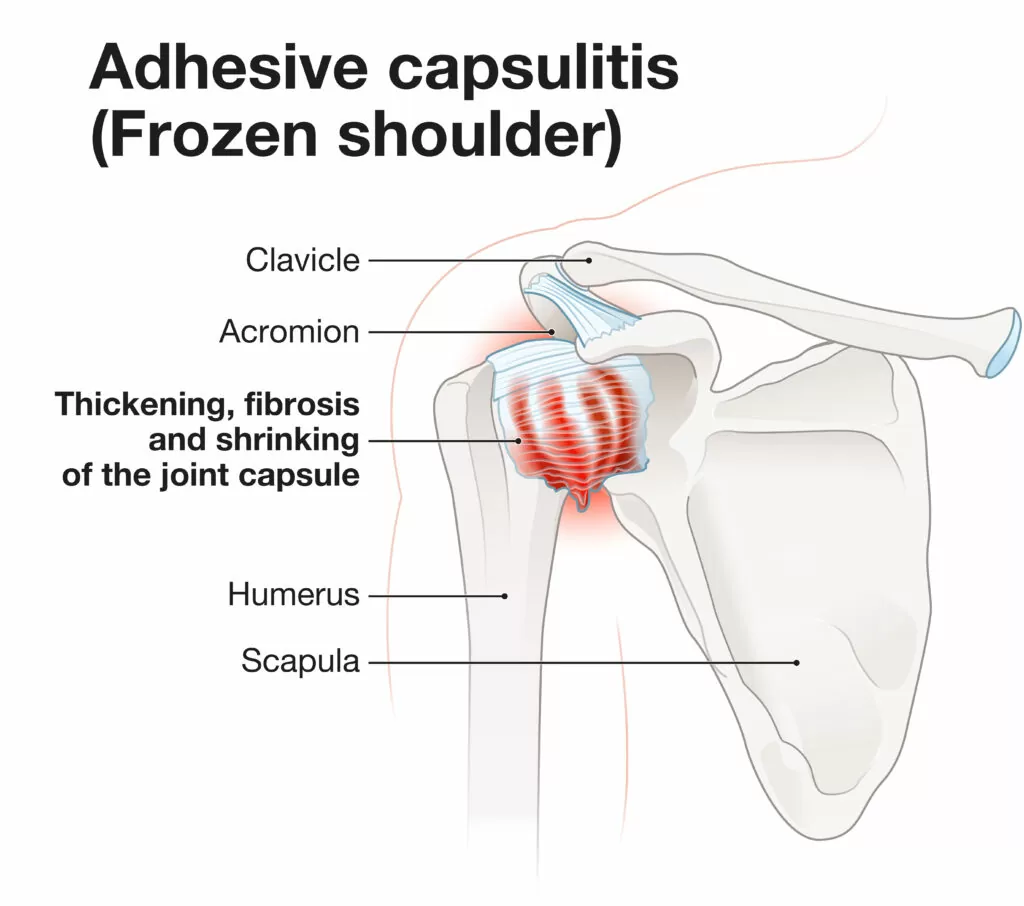
Frozen shoulder is a condition that develops when the tissue in your shoulder joint tightens and restricts movement. It is thought to be caused by inactivity that occurs after injury or alongside another shoulder problem, such as a rotator cuff injury, broken arm, or recovery from surgery.
The exact causes of a frozen shoulder are not fully understood. A few factors that may put you more at risk for developing a frozen shoulder include:
- Diabetes
- Hypothyroidism and hyperthyroidism
- Parkinson’s disease
- Cardiac disease
Most people struggling with frozen shoulders complain of pain, discomfort when moving or using the affected joint, or even a total loss of movement in that shoulder. Adhesions from the shoulder can become stiff or inflamed. Fortunately, physical therapy has been shown to help alleviate pain and mobility losses.
What to Expect from Physical Therapy
At your consultation, one of our physical therapists here at Carolina Prime Physical Therapy will assess your condition, pinpoint the exact source of your pain, take a look at your medical history, and evaluate your mobility and strength.
There are three stages in the development of frozen shoulders:
- Freezing: In this stage, you gradually experience more and more pain. As the pain worsens, you start to lose range of motion.
- Frozen: This stage is characterized by motion loss, whereas the painful symptoms may improve. Daily activities are typically challenging during this phase.
- Thawing: Shoulder motion improves during this stage, and there is typically a complete return to normal or close to normal motion and strength.
It’s pretty standard for patients to see our physical therapists in the freezing stage after they’ve already been experiencing pain for a little over half a year or nine months. At this point, they’re already in a lot of pain and pretty used to not being able to move their shoulders the way they’d like to.
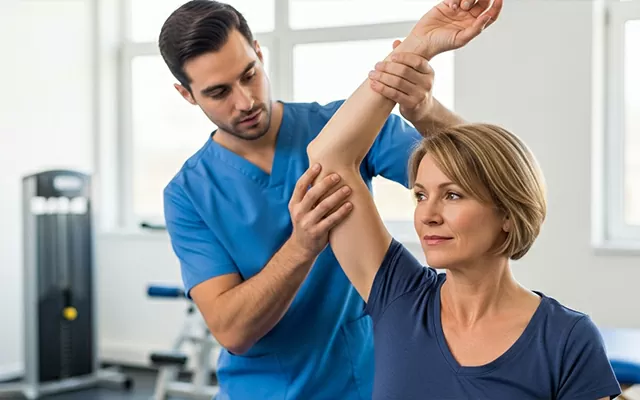
Our comprehensive treatment plan will consist of targeted stretches and specific home exercises to speed up the recovery process and regain your motion, reduce your pain and restore any lost strength.
Physical therapy for frozen shoulders focuses primarily on pain relief, using modalities like ultrasound, e-stim, and lasers. In addition, we take a hands-on approach using targeted manual therapy techniques like soft tissue work and joint mobilizations. Your physical therapist’s ultimate goal is to restore mobility and range of motion to the affected shoulder. The quicker we can address your pain symptoms and range of motion deficits, the sooner you get back to doing what you love!
Exercise of the Month
Modified Piriformis Stretch
(Hips, Glutes, Sciatic Nerve)
Start by lying on the ground with knees bent and feet flat on the floor. Cross one ankle over the opposite knee and gently apply pressure to the top knee to deepen the stretch. Hold for 30 seconds. Slowly lower your leg back to the floor and repeat on the other side. 3 Sets, 2 Reps.
Contact Carolina Prime Physical Therapy To Schedule An Appointment
If you have been experiencing recurrent or chronic shoulder pain, it is essential to consult with a physical therapist as soon as possible to find out if your problem is a frozen shoulder. Physical therapy is a safe and natural treatment option that can successfully help patients of all ages recover from their shoulder injuries.
Sources: https://www.koreascience.or.kr/article/JAKO202032265179017.page, https://www.banglajol.info/index.php/BJMS/article/view/51550, https://ijcrr.com/uploads/2754_pdf.pdf
Healthy Recipe:

Strawberry Dark Chocolate Yogurt Cups
Strawberry Dark Chocolate Yogurt Cups are a viral, healthy 4-ingredient frozen treat made by mixing Greek yogurt, strawberries, and honey.
Ingredients:
- Plain Greek yogurt
- Fresh strawberries, sliced
- Dark chocolate, melted
- Honey
Instructions:
- Spoon yogurt into a small bowl or glass.
- Layer strawberries on top.
- Drizzle with melted dark chocolate and a touch of honey.
- Chill for 5 minutes or enjoy immediately.
Patient Spotlight
⭐⭐⭐⭐⭐
“I just completed pelvic floor therapy today, and I can say that after 10 visits with Jennifer Sink, I am a changed woman! When I first started therapy for frequent urination, I was a huge skeptic; I was convinced I would end up needing medication. I am so glad I gave this a chance instead. It’s been a life-changer!”
Tony H.